
Level 1 vs Level 2 Home EV Charging
Compare Level 1 and Level 2 home charging, then learn what to check before installing an EV charger at your Chicago-area home.
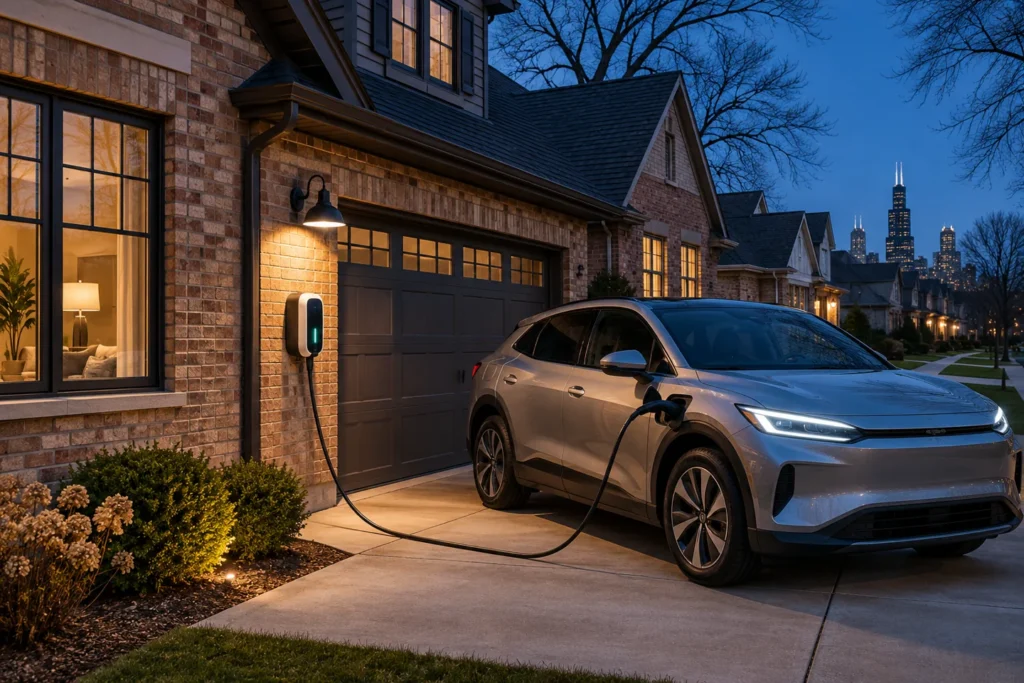
Start with your regular driving
Look at how many miles you usually drive, how much time the car spends parked, and how often you need to leave with a fuller battery. A modest daily commute and a long overnight window can make Level 1 workable. A second EV, shorter parking windows, or frequent longer trips can make faster charging useful.
Compare outlet and charger options
Level 1 uses a standard 120-volt connection. Residential Level 2 equipment uses a 240-volt supply and can recharge more quickly. Actual charging speed depends on both the vehicle and the equipment. Check your owner’s manual for connector compatibility and maximum AC charging rate before choosing a unit.
What to have ready for a site visit
Note where you park, which side of the vehicle has the charging port, and where the electrical panel is. A qualified contractor can assess capacity, cable routing, equipment location, and whether a hardwired unit or another configuration suits the home. If you expect to add solar later, share that when discussing the electrical plan.
Further reading: U.S. Department of Energy guide to charging electric vehicles at home.
Explore EV Charging or read Is Your Roof Ready for Solar Panels?.