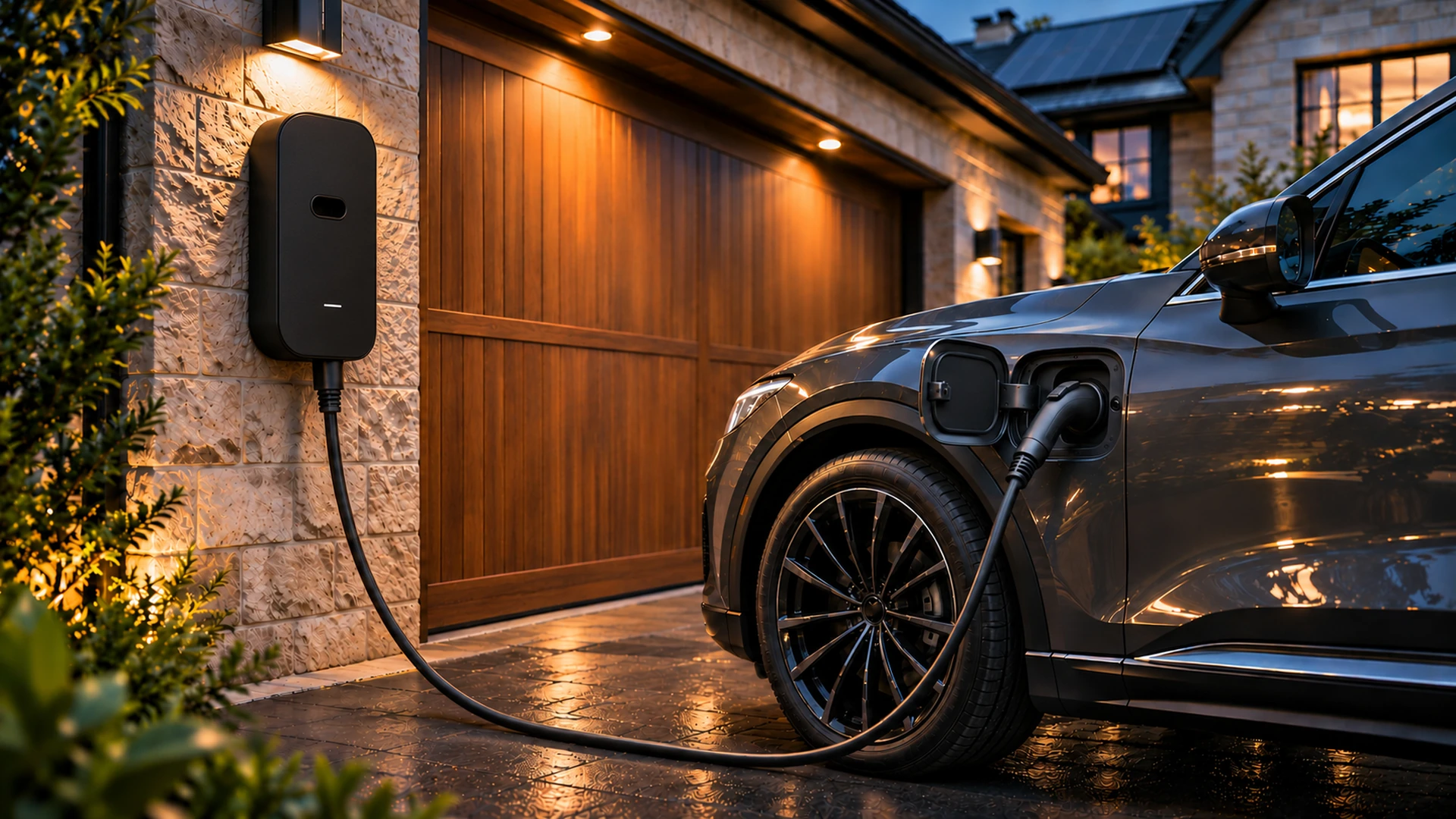
Park, plug in and leave the cable within easy reach. A home charger works best when its location fits the way you actually park.
Note which side of the car has the charging port and how you pull into the garage. The cable needs a clear route without crossing the usual walking path.
A site review covers the charger location, the route from the electrical panel and the charging equipment suited to your vehicle.
The right layout starts with the shape of your roof and how sunlight reaches it through the day.
Usable roof space, shade from nearby trees and the condition of the roof all shape where panels can go.
Bring recent electricity bills and roof photos to your project review so the proposed system reflects how your household uses power.
A standby generator can supply the circuits you choose during an outage. The starting point is deciding what your household needs to keep running.
Refrigeration, the sump pump and selected heating equipment often come first. Write down the appliances and rooms that matter to you.
Ask your installer to review the loads, fuel supply, transfer equipment and available outdoor space together.
If the house roof has limited usable space, a solar canopy can place the panels over a parking area.
Measure the parking area and think about how you enter and leave the space. Photos of trees and neighboring buildings help with the initial shade review.
A site review looks at the canopy structure, the electrical route to the house and where a charger could fit.
The Home Energy Journal
Your installation quote covers equipment and labor. The electricity you use after installation shows up on your utility bill. Keeping those costs separate makes quotes easier to compare.
A parking space close to the electrical panel can need a different amount of work than a detached garage. Ask for the proposed route, any panel work and any permitting costs to be itemized.
Use your actual monthly mileage, your vehicle’s energy use and the electricity rate on your bill. If your utility offers time-of-use pricing, compare the hours when your car is usually parked.
If roof replacement is already planned, discuss both projects together. It is easier to coordinate them before the modules go on.
Trees, roof features and neighboring buildings can shade different parts of the roof at different times. Photos help start the conversation. A site assessment gives the installer a clearer picture.
A year of bills shows seasonal changes that a single month can hide. Together with the roof assessment, that history helps an installer propose a layout and explain the production estimate.
Start with what you need during an outage. A refrigerator, sump pump, heating controls and a few lights lead to a different plan than running the entire home.
Some appliances need extra power as they start. A qualified installer can check those requirements and explain which appliances the proposed system can support at the same time.
Ask each installer to spell out the generator, transfer equipment, fuel connection, site work and maintenance in the quote. That gives you a like-for-like comparison.
We serve homeowners in Chicago and the surrounding communities shown below. Include your city or ZIP code when you request an estimate so we can confirm service at your address.
Tell us what you have in mind.
Your request goes to the team handling estimates.